

Scene Opens: Speed your strategy by ensuring all voices are heard

I once took a job that required that I move to California, along with my husband and kids. There were a lot of unknowns and a lot of perspectives. It was hard to make everyone happy. I had dreams of career and family adventure. My husband was all in but made sure we found a house built on rock (in case of earthquakes). My kids did not want to leave friends but hoped to see seals and whales. In my work with leadership teams driving a new strategy, I’ve found there are a lot of unknowns too. And a lot of perspectives. It’s hard to make everyone happy. And when the stakes are high, it’s easy for people to get locked into their different points of view. I wish I’d known Walt Disney had figured this out. Walt Disney was famous for looking at an idea for a film from different angles. The result? “The Wonderful World of Disney”. Walt’s approach inspired a methodology that can accelerate understanding for people with different perspectives. The “Disney method” has been adopted to improve team collaboration. It gives elbow room for dreamers, realists, and critics alike. Here’s how it works: Your WHOLE team “puts on” each role like a character, and then discusses your strategy together “wearing” the perspective of: All points of view are considered. People who normally lean toward one perspective or another get a good workout by stretching outside their comfort zones and seeing things from a new angle. Fears or worries or objections that might otherwise have lingered in people’s minds get openly discussed. Your team can move forward and co-create possibilities. Next time you’re tempted to silence the dreamer, the realist, or the critic on your team, consider what you might be missing if their voices aren’t heard. Who knows what “wonderful world” you may be able to create together?
Is the way you lead your strategy causing commitment phobia?

Is the way you’re leading your strategy causing “commitment phobia”?This Valentine’s Day, I’m pondering the challenge of leading a new initiative – from a relationship perspective. In my work with organizations driving high-stakes strategies, I find that if people aren’t aligned, progress will stall. Much like that awkward moment when two people on a dance floor bump into each other. Heightened uncertainty these days about where the world is heading can cause lovers as well as employees and partners to question whether they’ve really found their match. Many steer clear of anyone who is trying to push, control, coerce or chase them, leaving some leaders feeling frustrated in their attempts to get people on board for a new strategy. “Commitment phobia” can occur when a person is asked to buy into someone else’s plan, regardless of their own beliefs and life purpose. Just like any dance, choreographed or not, two people on a dance floor need to establish a level of trust before the possibility for lasting romance unfolds. In the same way, even the BEST strategy will FAIL if people are unclear, skeptical, or not aligned to take action. Getting aligned takes more than just TELLING people your big new idea. To accelerate results, leaders need to be authentic with the people that need to take action. This is why I find that getting your strategic positioning right is so important. Your strategic positioning clarifies what you stand for, the problems you solve, and who you solve it for. It helps others know quickly why they should engage with you. And builds trust. Are your employees and partners clear on your new strategy? Do they understand and believe in your new direction enough to follow your lead as you pivot? If not, stop and take a breath. Kickstart an effort to clarify the fundamentals of your strategic position. Help your team and partners understand where you are going and take the time to build alignment. You’ll find this “dance” is worth it. #strategy #leadership #riskmanagement #peoplesideoftech
People often ask me what “go-to-market” means…

After decades of working in this space, here’s my definition: Go-to-Market = “Aligning ALL your resources (internal AND external) to be able to take action — to get traction and drive impact.” The problem I find is leaders with a new strategy (especially those in the C-suite, and product managers too) often UNDERESTIMATE what it takes for people to understand and trust and believe the big idea so they CAN take action! And as a result, momentum stalls.People get frustrated.Commitments are missed. A great go-to-market plan is NOT just:*A snazzy new website or Instagram campaign that is inspiring and beautiful but doesn’t explain the problem you solve*A press release that surprises your channels and customer service department that you have a new offering*A detailed training plan that doesn’t explain the bigger “why”*A disruptive “gamechanger” for your market that didn’t start with listening to your customers/supply chain/ecosystem. Even the best strategy will FAIL if people are confused, skeptical or not aligned. So step back and evaluate all the different resources who will need to take action — even if they don’t work for you– and ensure you’ve anticipated what they need. If you’ve got a BIG idea, and want to get traction faster — I suggest you think BIG about WHO as well.
Which do you plan in: Pencil or Ink?

Through the pandemic, I started planning in pencil – both literally and as a mindset. Have you? I find myself: With rolling quarantines, more people contemplating quitting their jobs than ever, and a supply chain that still hasn’t found its bearings: The pencil seems to be here to stay. But in working with my clients driving new strategies, I see a question emerging: What exactly CAN we write in ink these days? I believe your stake in the ground needs to be your Strategic Positioning. Your organization’s strategic position clarifies what you stand for, the problems you solve and who you solve it for. It is grounded in your WHY. It helps others know quickly why they should engage with you, and builds trust with those you serve, your employees and partners, funders, and supporters. If you haven’t done this work for your organization – don’t put it off! Get everyone in a room and at least focus on defining the problem(s) you want to be known for solving. Yep, it’s true: Our planning for HOW may FOREVER be written in pencil! But I believe your Strategic Positioning — and the WHY that supports is –– is worthy to be written in ink. What are YOU writing in ink as we start 2022? — All the best Susan #strategy #riskmanagement #leadership P.S. If you are interested in practical ways to accelerate the results of your new strategy, check out the De-Risk System for Impact. It might prompt some good dialogue with your team. And click here to subscribe to future insights.
Taking the Risk: Diversity of Thinking

During a long plane ride home from a global tech conference, I was reflecting on diversity — and frustrated. Now, over five years later, I think many are still missing a big point. Spurred by new awareness and mandates, there is an urgency today to get more diversity on boards and leadership teams to better align with public and private organizations’ constituencies of employees, customers, and communities. But there seems to be a naive expectation that simply getting more perspectives at the table will immediately result in dramatic change. Truth is, achieving diversity of people “in the room where it happens” is just the qualifying round toward a bigger challenge: to LISTEN. Despite the age-old counsel, “let every person be quick to listen, slow to speak, slow to anger,” there seems to be a tendency today to stay in our own thinking “bubbles” and be a little annoyed if others don’t agree with our own perspective. Yet, solving the world’s biggest problems with innovative new ideas is going to require we are more intentional about understanding different points of view and finding a way forward — together. As I consult with organizations to de-risk new strategies, I help them avoid common mistakes. One mistake leaders often make is to underestimate how diverse the perspectives are of the people who will need to take action. Sure, listening to a lot of different opinions can take time and sometimes be frustrating. But assuming everyone is on the same page is dangerous. It will de-rail even the best strategy. My observations over five years ago seem even more relevant today: “…A diverse workforce or industry does not always guarantee diversity of how people think. People often follow the lead of others around them and take queues about what is acceptable – and unacceptable — to bring up. Being different is risky, as children learn early. The same is often the case in the workplace. Diversity of thinking in an organization requires an intentional effort. It requires time and patience to explore different ideas before a decision is made. It means discussing ideas that don’t seem workable, or that have already been rejected. It requires messy, sometimes uncomfortable conversations that raise eyebrows and make people squirm. Diversity of thinking demands trust that those offering new ideas will be legitimately considered. But it also requires they do their homework and be open to “old ideas” which still have merit. Diversity of thinking requires humility on the part of those who listen as well as those who propose a change. It requires respect for others who are different — and it requires taking a RISK. Diversity of thinking can be magical: energy in the room, breakthroughs, fireworks, and agility to move fast and seize a window of opportunity. Diversity of thinking can be created by one person with the courage to bring up a new idea and just as quickly crushed by peers or leaders without the patience to listen to it. Though leaders and peers may be diverse — from different races, ages, genders, ethnic/cultural backgrounds, abilities, social class, or sexuality– their diversity is only as magical as their own ability to listen and nurture the still small flame of a new thought.” So, what are you doing to take the risk to ensure diversity of thinking? To accelerate the success of new strategies, I encourage leaders to be intentional and plan for diverse thinking right up front by asking these five questions: 1. Who are the people or roles whose new action will be critical to our success? 2. What do these people understand or believe or fear or need related to this topic? 3. Why would they be motivated to take action to move this strategy forward? 4. What are the common themes, and which unique ones need better understood? 5. How are we ensuring these perspectives will continue to be heard and encouraged –not only at launch but as we execute? Understanding the variety of perspectives can be powerful! It can help you flag risks in your strategy, uncover new solutions, avoid going down ratholes, and even gain new funders and supporters, Taking the time to do this upfront can actually accelerate your results! But be warned: Actually listening to other perspectives means you may have to make changes in your plans — and step up to make a change of your own as a leader (which may feel risky too.) As I personally advocate to improve the diversity of those at the table, I have decided to hold myself accountable to taking more risks: to listen more fully to opinions I don’t agree with, to truly consider the implications of a new perspective, and to be more open to exploring the myriad of differences among us in order to find common ground that can connect us. I’d welcome your taking these risks with me. Who knows what positive impact achieving true “diversity of thinking” could unleash in this world? If you’d like to talk about ways to de-risk your own organization’s new initiative -and learn more about the Changemakers De-Risk System for Impact℠, let’s connect! susan.schramm@gotomarketimpact.com.
3 Questions to Always Ask about the “People Side” of Tech
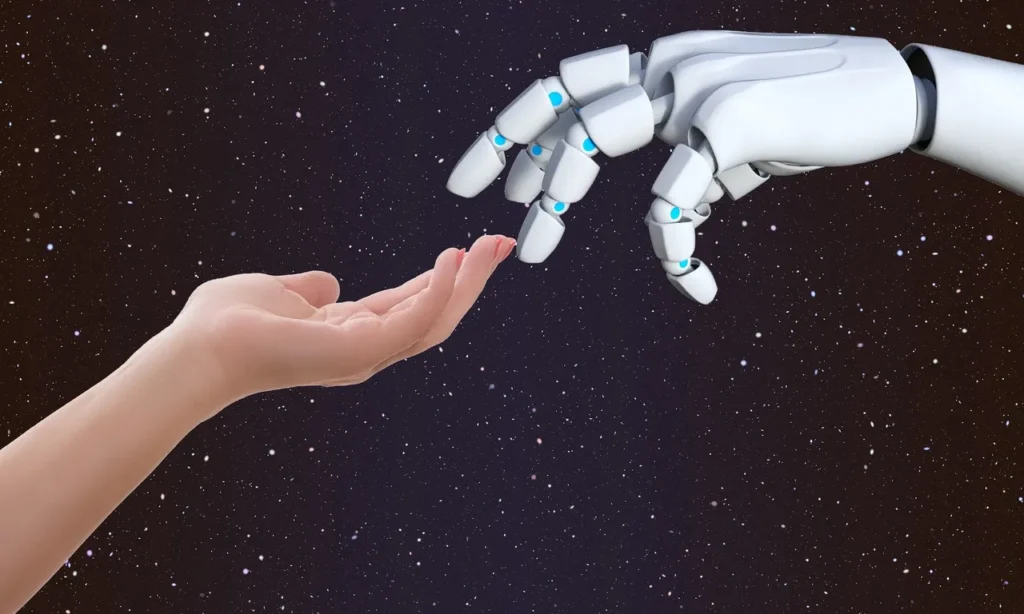
Pulses quicken as headlines roll in: Robotics, drones, self-driving cars, digital health, e-sports, home automation, immersive media, blow-your-mind-fast 5G! At CES in January, over 60,000 tech disruptors, innovators, and business leaders whose industries are being disrupted by tech and the Internet of Things, all show up in LasVegas to be wowed and pow-wow about the latest innovations in tech. But can we hit the pause button, and talk about something more mundane? Like…people? I work with organizations to accelerate results by getting the go-to-market right. In working on tech-related introductions with innovative leaders from Fortune 500’s and startups to non-profits and municipalities and the military, I’ve learned that we all seem to make one common mistake: We undercall the time and effort required for the “people side” of tech. Yes, disruptive technologies mean placing big bets and require significant investments. Clarity and aligned roadmaps related to materials and capacities, standards and protocols, interfaces and platform integration is critical. But time-to-revenue and time-to-profit for new tech introductions have an equally significant dependency on people. Clay Christensen reminds us that 300,000 new consumer products are launched each year and 95% of them fail, many times because we don’t solve the “job to be done” from the customer’s point of view. And researchers.” Joan Schneider and Julie Hall point out, “The biggest problem we’ve encountered is lack of preparation: Companies are so focused on designing and manufacturing new products that they postpone the hard work of getting ready to market them until too late in the game.” But I believe these are only part of the challenge of the people side of tech. Disruptive technologies mean a lot of change — and we consistently undercall the time and effort required to ready the people who do the work after the big “ta-da”. More than just the marketing team, this means readying the entire community of people that, on an ongoing basis, will deliver and sell and support the offer, and need to understand the impact of disruptive solutions from their own vantage point. From the supply chain to finance to contracts to sales channels and partners to customer service and operations to IT and HR, all these people end up as stewards and ambassadors for our shiny new “wonder-tech,” and must deal with lots of questions of their own. They need to gain understanding of big new concepts, new vocabulary and new processes. Increasingly it means the need for new roles and building entirely new skills. And when we’re talking about the latest in Artificial Intelligence and robotics and drones and self-automated-everything, it means overcoming fears that this exciting new stuff might actually obsolete or replace them! For tech providers moving to Tech-as-a-Service, “this cloud-driven journey will affect every part of the organization”, according to Thomas Lah and JB Wood at Technology Services Industry Association . And while AI is getting more user-friendly, PwC noted in their latest predictions about Artificial Intelligence trends, “Even with basic training, business people may not fully understand different AI algorithms’ parameters and performance levels. They could accidentally apply the wrong algorithms, with unintended results.” There are very real consequences of not planning for the “people side of tech”: · Open headcount for critical skills going unfilled · Errors and uncertainty across the organization when making routine decisions · Delayed and incorrect answers for customers · Uses of the offering that have unexpected ethical or legal consequences. And when this shows up financially, it looks like: · Missed market windows · Missed revenue · Delayed time-to-profit. But we can avoid this! We can ask more questions earlier about the people we depend upon as we envision, realize and bring innovation to market, just as much as we tend to ask about the technologies. We can make sure product definition and new product introduction (NPI) processes incorporate a plan for the people side right from the start, and that product managers see their role as responsible for ensuring needed new skills, roles and processes, and even the ethical governance to ensure a product is used as intended. We can track metrics that address time-to-enablement and skills adoption, just as we do KPI’s related to inventory turns and software defect rates. So, as you kick the tires of all the exciting tech innovations this year, and evaluate how to incorporate them into your business and investment plans and the implications on society, I challenge you to ask at least these three questions about the people side of the innovation: 1. What new SKILLS are going to be critical success factors for this to be developed, delivered, adopted and scaled? 2. What ROLES AND PROCESSES will need to be eliminated, changed or created across the supply, delivery and distribution chains and sales channels – as well as for end user and customer organizations? 3. What ETHICAL assumptions are we making about how this offering could affect people— and what plans should we put it place place to monitor it so it doesn’t go off the rails? You’ll be sure to start some great dialogue, and very possibly accelerate the impact of innovation! Susan Schramm, Founder and Principal, Go to Market Impact LLC susan.schramm@gotomarketimpact.com
Robots Need Humans Who Care

The voice-activated IoT-enabled AI-analyzed robot-clad cloud-delivered possibilities at CES, the “world’s largest tech show,” did not disappoint. But I went to Las Vegas this year intent on learning about something a bit more mundane: People. I believe we often neglect the “people side of tech,” and started with the question,” What Skills Will We Need to Make All This Work? But the big elephant in the room was that automation is eliminating jobs. Even as leaders herald skyrocketing productivity, the waves of forecasts have been ominous: “75 million existing jobs will be automated by 2022”, touted the World Economic Forum WEF; “Robots will perform 52 percent of current job tasks by 2025”. Forrester warned, “10 percent of US jobs will be lost to automation in 2019” The Sunday night before CES started, Kai-Fu Lee, author of AI Superpowers: China, Silicon Valley and the New World Order, was interviewed by CBS 60 Minutes “Forty percent of the jobs in the world will be displaced by technology”. So it was with a sense of urgency that I queried leaders at CES: “Exactly what new roles will be needed to make this cool tech a reality? And exactly what work is going to be left for mere humans to do?” After some awkwardness, the discussions got interesting. Here are some of my observations: This Is Actually Familiar Ground While AI, robotics, big data and machine learning are already starting to automate routine tasks, most people identified work humans will still need to do to support the end-to-end supply chain for delivering all these capabilities. New roles will require that people learn the why/what/how of these automated solutions. But these new roles are often based upon ones we are quite familiar with. The names might be new, such as “robot personality designers” or “automated vehicle maintenance technicians” or “data trash engineers”, but people will still be needed in roles that define, develop, distribute, sell, support and maintain new tech-enabled offerings. “Houston, We Have Problem” While automation will definitely free people of routine tasks, it will also create opportunities for people to serve in roles that ensure these new offerings actually deliver on their promise. Consider “Network Control Center Managers” for driverless cars, or “Customer Success Managers” for residents of complex Smart Homes and workforces in Smart Buildings. People serving in these new roles won’t need to have engineering PhD’s, but will need to understand what a user is striving to accomplish, and how the solution is supposd to help them, and what to do if it doesn’t work. Cognizant flagged that just the task of securing all this technology is going to create a breadth of new positions: “Cyber Calamity Forecasters”, “Machine Risk Officers”, and “Virtual Identity Defenders”. Humans will be needed to serve in a myriad of roles to monitor, enable, support and resolve issues for overwhelmed and sometimes frustrated people. We are essentially creating the need for “Mission Control for Mankind,” staffed by people with the ability to not only use technology and problem solve, but who have compassion and good communication skills to help people gain the benefit of this techno-wizardry. Filling the Jobs that Humans Aren’t Though many have voiced concerns about automated vehicles eliminating jobs, today there is actually an enormous shortage of truck drivers. In fact, “truck driver” made the 2018 list of toughest jobs to fill in the United States. This is the result of an aging workforce, high turnover and soaring demand for freight delivery. (Thanks, Amazon!) Thousands of open driver positions are going unfilled around the world, not only in long haul trucking, but for local deliveries as well. Tech to the rescue! The folks at UDelv are convinced that one of the earliest benefits to humans of self-driving cars will be to provide excellent quality last mile delivery. UDelv is already delivering groceries for the not-for-profit meal organization Second Harvest Food Bank . They are also working with XL Parts to get local auto repair shops the critical parts they need faster. Ford is partnering with Walmart , and GM’s Cruise is teaming up with DoorDash to pilot last mile delivery as well. This application of automation addresses a gap. Automation is used in lower risk, predictable driving routes to serve customers who may not have been able to receive or even afford that service. Win-Win. Addressing a Caregiver Crises An estimated 117 million Americans will need assistance of some kind by 2020 as baby-boomers age, yet the number of caregivers – paid or otherwise – is woefully inadequate. A new wave of caregiving is required that incorporates technology to meet this tsunami of demand. At CES, I was delighted to meet Addison Rose, the virtual caregiver, enabled by AI and augmented reality, to help people safely recover from illness or age at home. The system monitors your activity, reminds you to take medications, evaluates your gate as you walk, and provides real-time assessments if a client develops evidence of increased risk of falling or health decline. And in the same way that Tom Hank’s Castaway character became emotionally connected to his volleyball friend “Wilson”, patients who’ve had “Addison the Virtual Caregiver” as a roommate often report they are less lonely with this voice-enabled perky companion. Families who have taken on the role of caregivers for loved ones are often overwhelmed and exhausted by its complexity. They too are going to be able to lean on technology to support them in new ways, such as the recently launched Ianacare , an application that creates a virtual care team for caregivers. Mobile connectivity and AI is also helping to vastly expand the number of people available to care for those in need. Be My Eyes is helping the blind and those with low-vision solve day to day problems by crowd sourcing the help of sighted people on the spot, using everyone’s mobile phones. Crisis Text Line is saving lives every day by providing a free, 24/7, confidential text message service, staffed by millions of volunteers using their phones to support people in crises by text. These new business models enabled by new technologies are creating new “caregiver” roles for a global community of volunteers and professionals whose skills, knowledge, and compassion never
What skills will we need to make all this tech stuff work?

As the curtain closed on the Consumer Electronics Show in Las Vegas, the story was clear: “Whatever the question, tech has the answer… for every industry.” The cornucopia of voice-activated-IoT-enabled-AI-analyzed-cloud-delivered possibilities did not disappoint. Even more impressive than the technology was the undeniable evidence that every industry is already a tech industry. Transportation, health, education, agriculture, construction, sports, finance, fashion, entertainment… the breadth of examples and leaders representing so many industries was impressive. It seemed that there is no problem that cannot be solved with technology – and there is no escaping technology in any industry, even if you wanted to. However, I went to Las Vegas intent to explore a topic a little more mundane: People. I firmly believe that the “people side of tech” is frequently neglected, and the consequences are significant. (See “Three Questions to Ask About The People Side of Tech”). I share here some insights gained in exploring the people angle, which you might have missed in all the razzmatazz tech headlines: Which Skills Are Going to Be Most Needed to Make All this Work? Technology consistently amazes us with “what” but I quickly get concerned with “how”– especially the skills we are going to need to develop in our current and future workforces to pull off all the cool innovation. Ginni Rometty, CEO of IBM, stated it bluntly: “Skills are the challenge of our time.” When I asked leaders which skills they were most concerned would be needed to make their hot new innovations a reality, most instinctively pointed to the tremendous demand for coding skills as well as competency with using analytics and AI. Commonly suggested was the need for a “bigger tent,” to bring more people into the tech-savvy world. This might be accomplished through more inclusive apprenticeship programs like the Apprenticeship Coalition CTA and IBM announced, or by building a more inclusive community as WiCyS, the Women in CyberSecurity, is doing. There were also those who thought we can close this skills gap significantly by simply training the machines to do the coding themselves! But I also uncovered concerns that a higher level skill needed to be prepared for: We will need to be able to think BIGGER than the machines. Making Data Make Sense “Big data” has become overwhelming. Dr. Andrew Ng, CEO of Landing AI, confirmed that artificial intelligence is increasingly able to provide more useful small data which is selective, real time and closer to the user. NPR’s Meg Goldthwaite and several Forbes Most Influential CMO’s flagged that “marketing analytics” skills are more crucial than ever. But it is evident that how the problem is defined dramatically affects how the data is used, and that responsibility will continue to fall on the shoulders of problem-solving humans for the foreseeable future. Those I interviewed acknowledged that no matter how good we get at slicing and dicing the data, we must still pose the right questions, and make judgment calls when the data doesn’t make sense. Right along with building skills in coding and analytics, we must build and improve our ability to define the problems and the metrics clearly, and to ensure both are meaningful. Systems Thinking We heard incessantly about 5G’s promise to ignite a completely new landscape for delivering value. (And we will undoubtedly be hearing even more about it during Mobile World Congress in Barcelona in February.) 5G was discussed as foundational for the Fourth Industrial Revolution, which World Economic Forum’s Klaus Schwab suggested will be disrupting every industry by blurring the lines between the physical, digital, and biological systems. Okay, sounds like big change is coming. But what skills will be required for us to build and deliver on these sweeping promises? A common concern was that with increasing complexity comes a real need for people to look around the corner, beyond the immediate problem, in order to fully understand the context. We will need to regularly engage stakeholders across more functions as we define and solve problems, instead of working and thinking in silos. We will need to equip even young children learn to use “systems thinking,”a more holistic approach to problem solving. In doing so, there is the opportunity to anticipate and plan early for unintended consequences, even as we thrill and value the marvelous innovation at hand. This was highlighted in a sobering discussion about Smart Cities, Public Safety and Disaster Preparedness. The question was posed: With all the new technologies, are we safer, more prepared, more resilient now? Some were confident that we are more prepared for emergencies, especially because everyone now is likely to have a cell phone on hand. But serial entrepreneur and CEO of Higher Ground, Rob Reis, challenged: “We do count on cell phones as the answer to emergency preparedness. But in the Santa Rosa fire or in Hurricane Sandy, cell towers were destroyed, we lost power. We are setting up new threats. Today, 50% of homes are using voice-over-IP for calling, which will go down if our power does.” Did we, the consumers and enterprises who became enamored with the lower price points of VoiP or the freedom of mobile phones, need to do more systems thinking early on? Or did we delegate that the responsibility to the technology providers, and expect that they would plan for us? In what ways should all of us — technology providers and technology users alike — step up right now and consider the practical implications and the unintended consequences of our newest shiny toys, artificial intelligence and drones? Yes, technology is pretty complicated. But the “people side of tech” can be pretty thorny too. It is a journey that we need to plan more intentionally to take together. If you would like to explore this journey further, contact me and we can continue the discussion. https://www.linkedin.com/in/susanbaileyschramm/